Up to 174 Tubes of Color, Released at Once
THE APPARATUS
Building the Chandelier
Traditional resin application relies on pouring, brushing, or letting the medium flow organically. These methods produce the fluid, unpredictable aesthetic common to resin art.
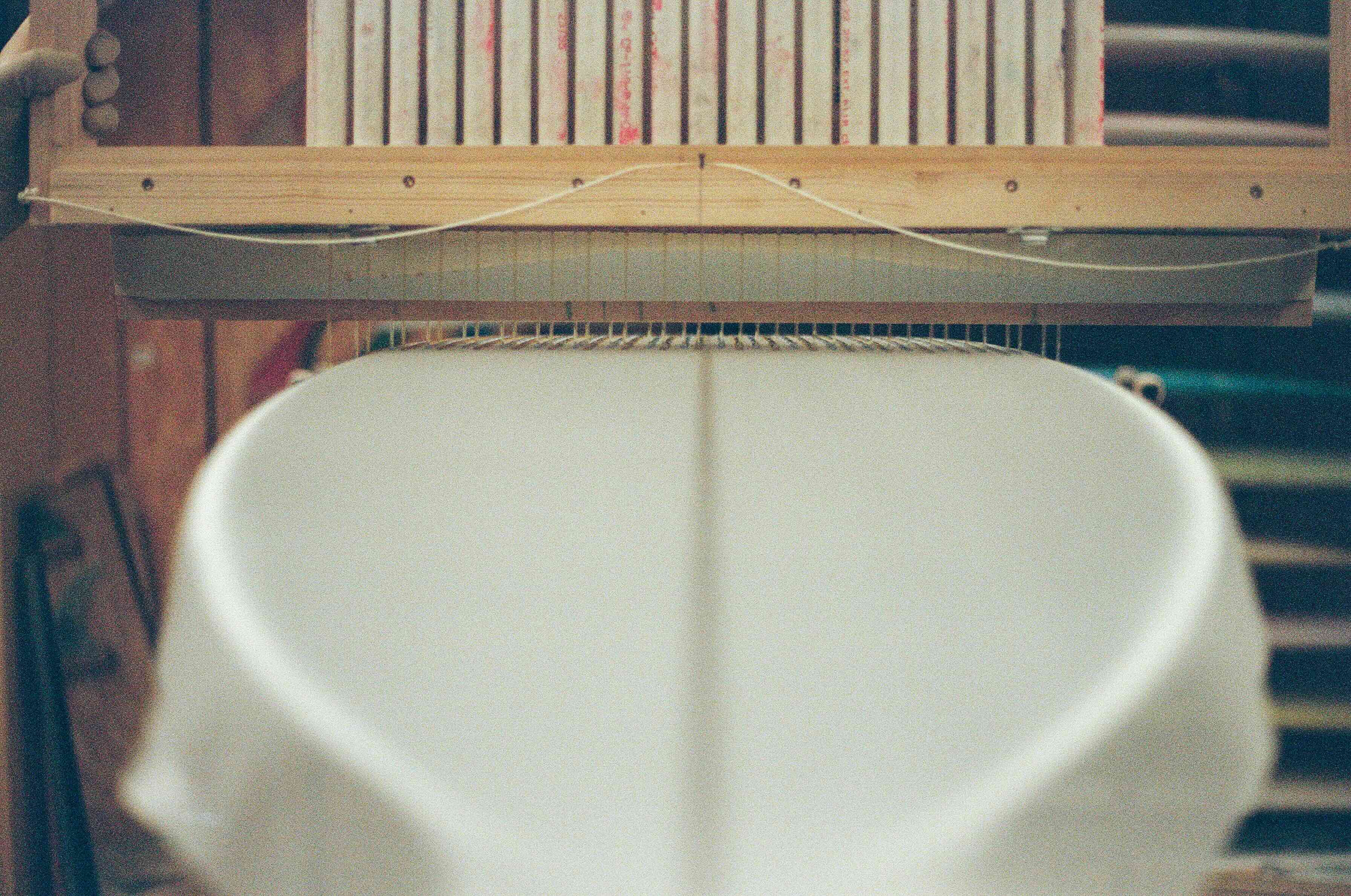
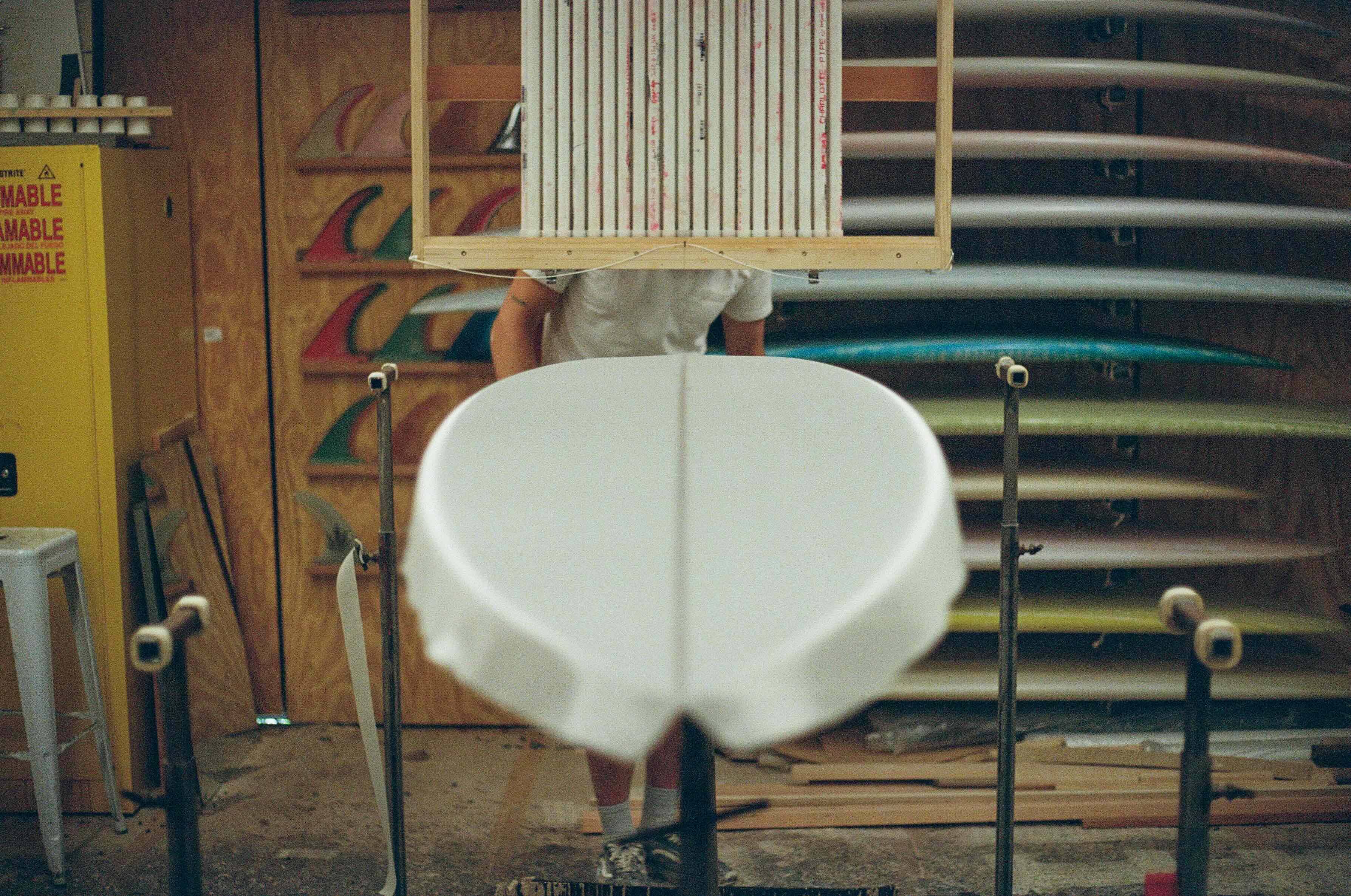
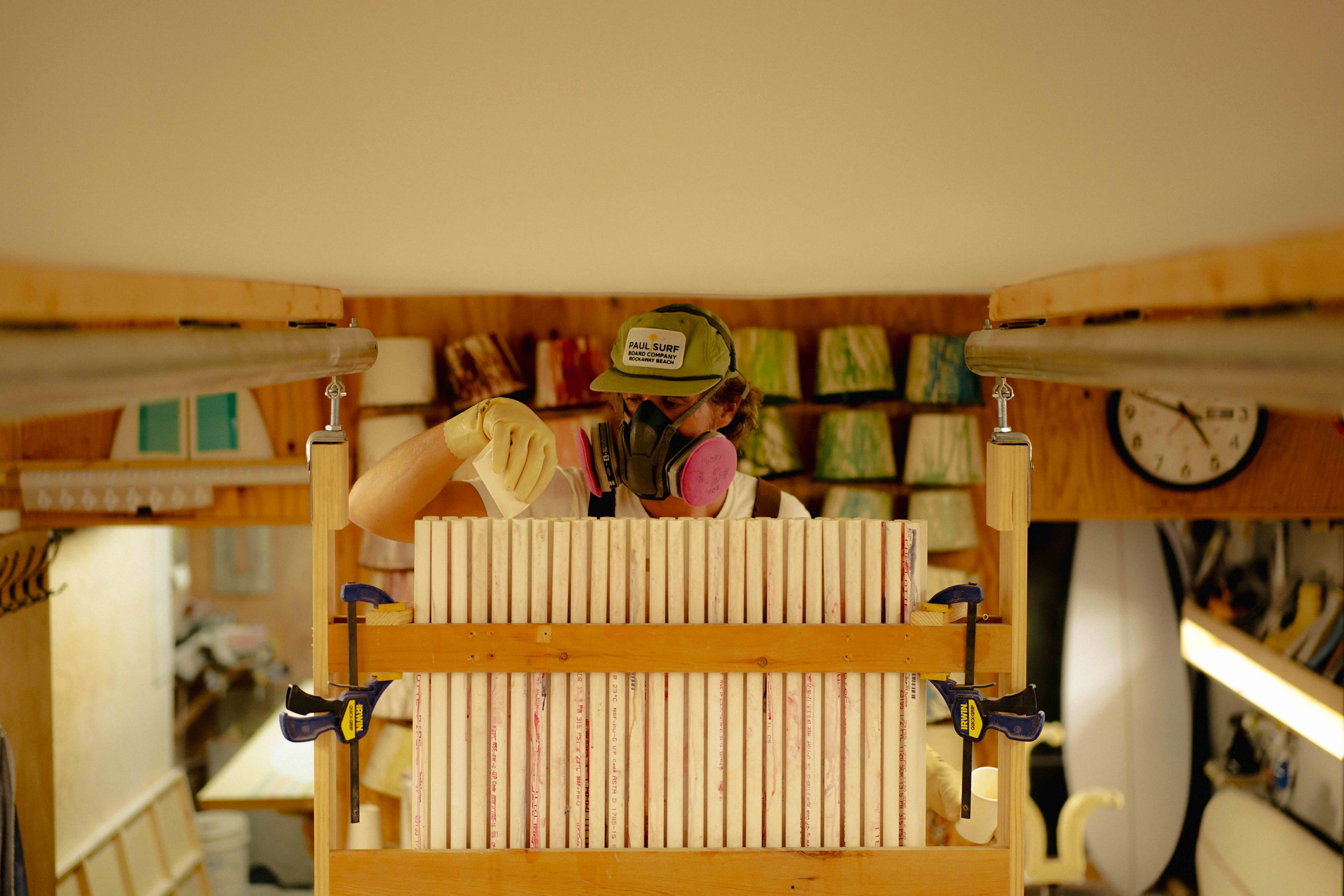
To achieve linear precision, Paul engineered an overhead system: a suspended rack holding over 100 individual tubes, each filled with tinted resin and released simultaneously by gravity.
The apparatus is calibrated to his studio in Rockaway Beach. Each tube must release at the same moment, with consistent flow rate and viscosity. A single stuck valve, uneven release, or miscalculated cure time can compromise the entire piece. There is no correcting mid-process. The work is developed in one irreversible pass.
THE PROCESS
Color Mixing and Gradient Control
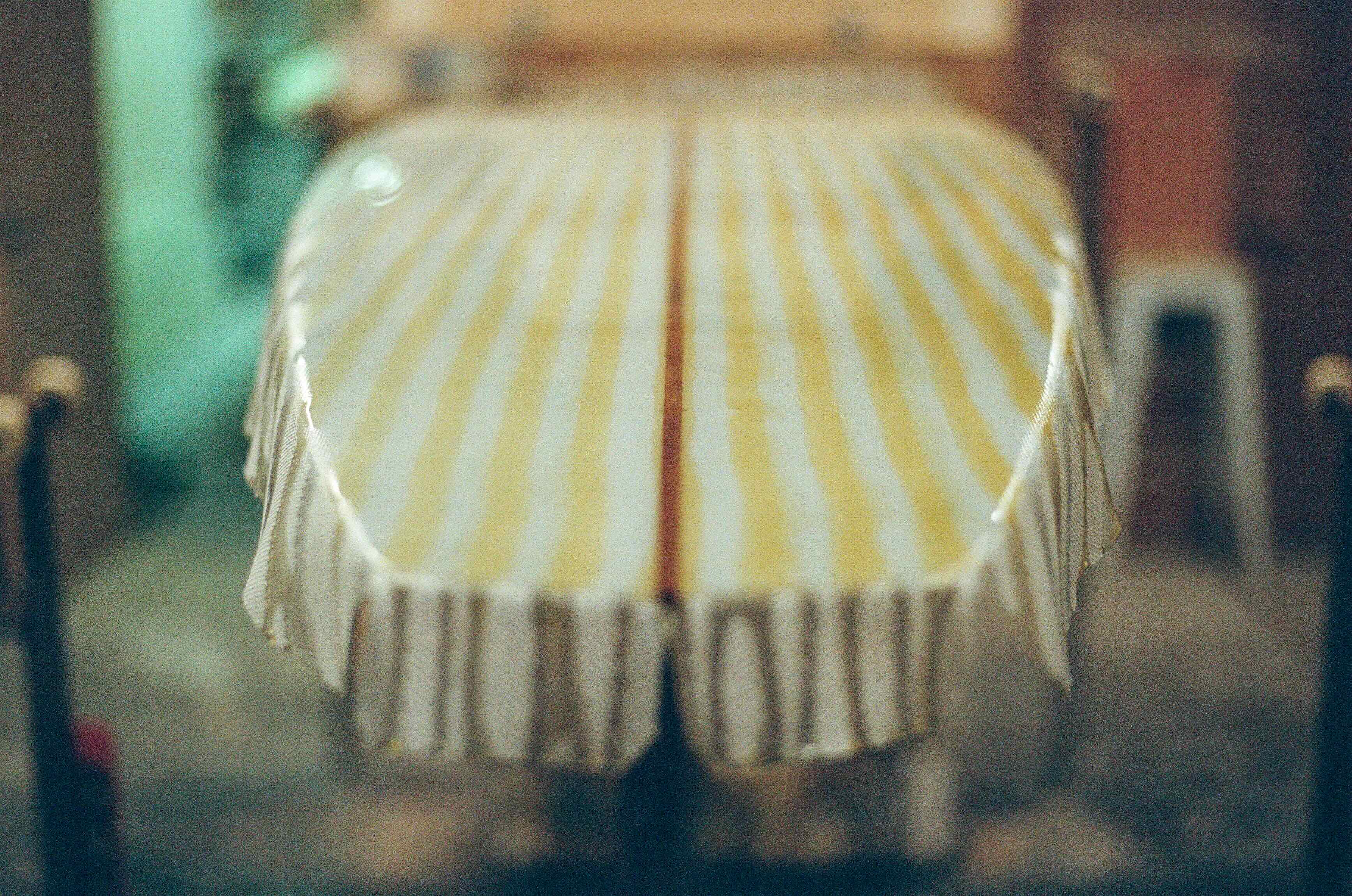
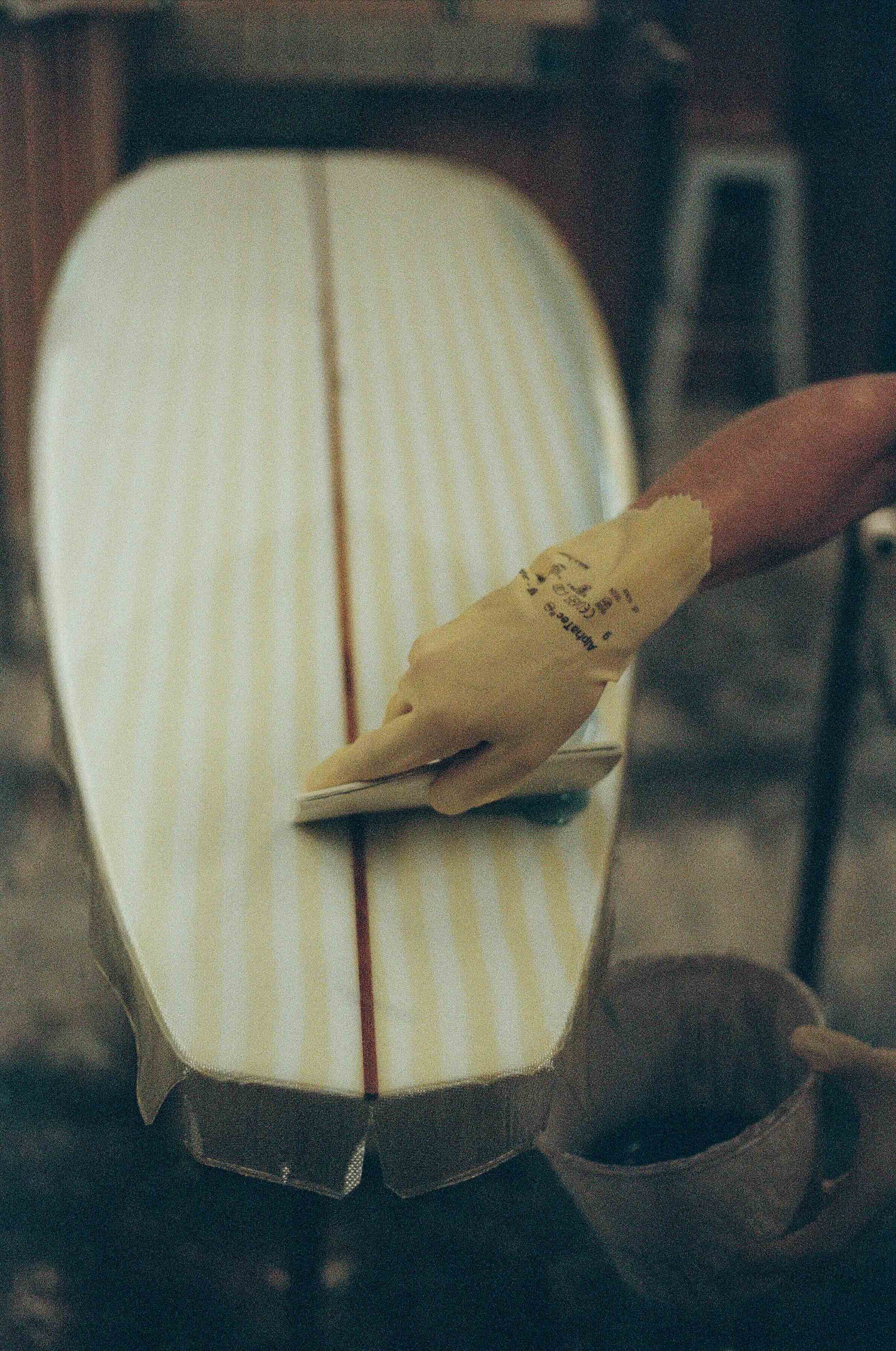
Creating a smooth gradient requires dozens of individual color mixes, each calibrated to precise pigment ratios. Paul measures each batch by hand to ensure seamless transitions between hues, a process where even minor inconsistencies in saturation become visible in the final work.
Resin cures rapidly, which means all mixing, loading, and setup must be completed within a narrow time window. The pigment ratios affect not only color but also viscosity and cure rate, requiring adjustments to maintain consistent flow across all tubes.
This synthesis of chemistry and craft is what allows the technique to produce sharp boundaries between colors, an effect resin naturally resists.
THE RESULT
From Functional Object to Wall Work
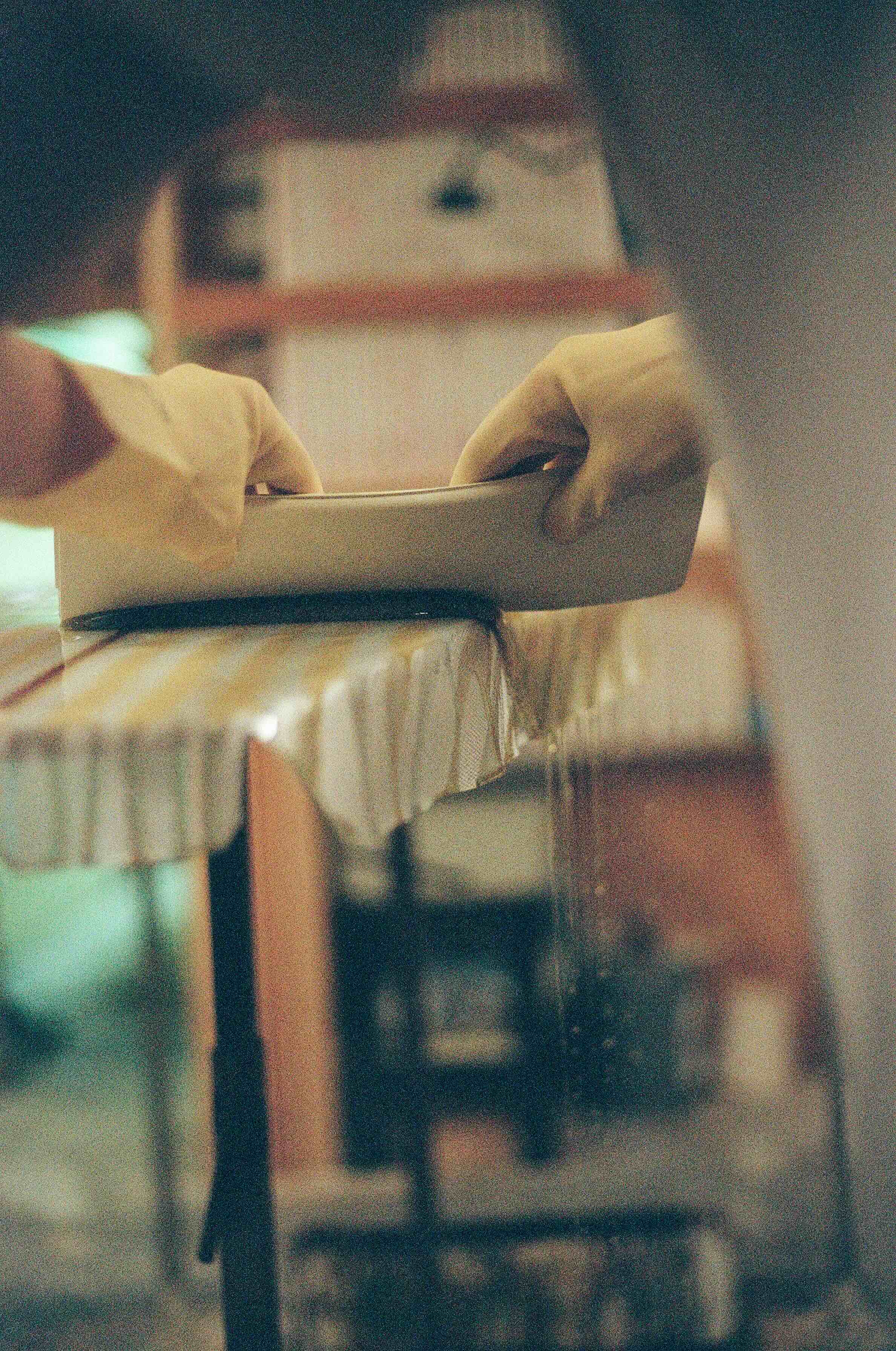

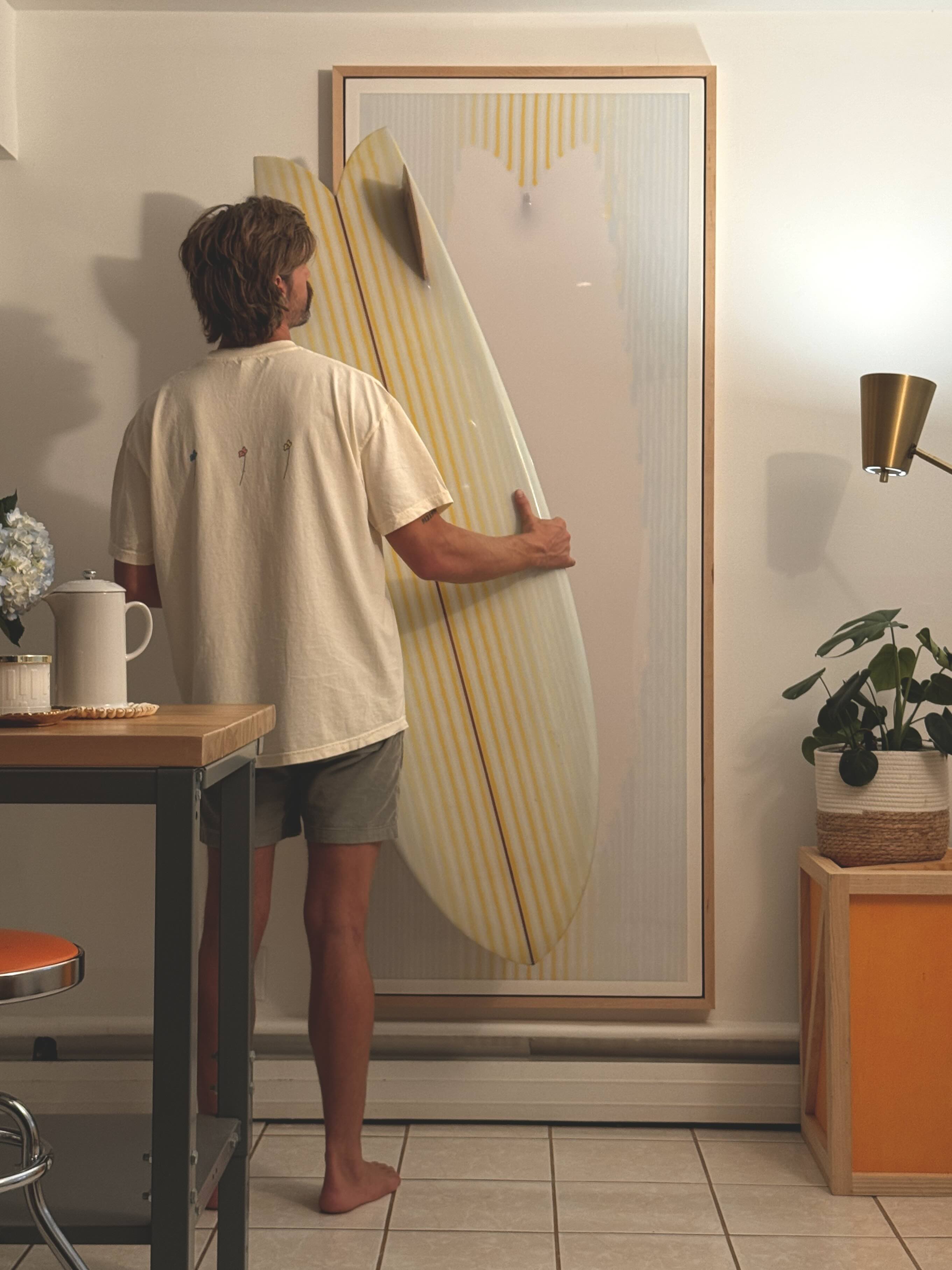
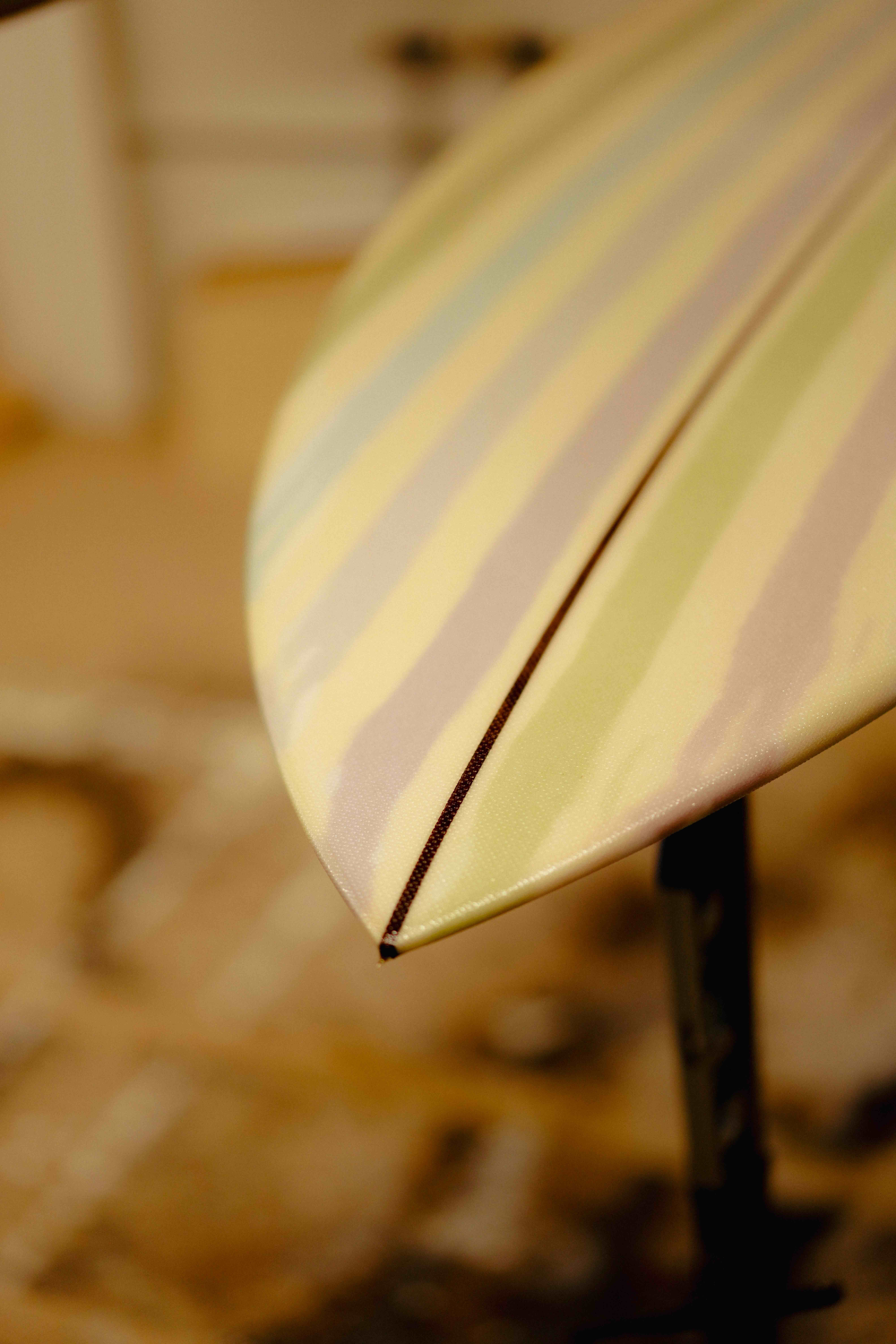
The Chandelier Technique was developed in the context of surfboard building and now extends to standalone art pieces. The process applies equally to functional surfboards, which must withstand saltwater, impact, and flexion, and to wall-mounted works scaled up to 98 x 60 inches.
Each commission is conceived and executed entirely by Paul. The technique produces a glass-like surface with depth and luminosity, comparable to stained glass or a color field painting, while maintaining the structural integrity required for its application.
Custom surfboards are $5,000.
Surf + Board pieces (surfboard and wall mount canvas art laminated as one) start at $11,000.
Large-format wall pieces priced individually based on scale and complexity.